Address
Orile-Iganmu, Lagos, Nigeria
Work Hours
Monday to Friday: 9AM - 5PM
Weekend: By Appointment
Address
Orile-Iganmu, Lagos, Nigeria
Work Hours
Monday to Friday: 9AM - 5PM
Weekend: By Appointment
IT for the common Man

 ByMzeal01
There is a quiet revolution happening in Lagos, and it is not on the streets of Victoria Island or the corridors of Alausa. It is happening on laptop screens in Surulere, at training centres in Ikeja, and at kitchen tables in Ikorodu. Young Nigerians, and even not-so-young ones, are making a bold pivot: they are leaving traditional careers and walking, sometimes running, into the tech industry. At MzealTek, we have watched this shift unfold in real time, and the numbers tell a compelling story.
So, what exactly is driving this mass movement toward tech careers, and which skills are the most in demand heading into 2026?
The Nigerian Bureau of Statistics reported in 2024 that youth unemployment hovered around 33%, yet the country’s tech sector was simultaneously importing talent due to a shortage of qualified local professionals. This paradox tells us something important: it is not that there are no jobs; it is that the available jobs require skills that our educational institutions have been slow to teach.
Global companies such as Andela, Flutterwave, and international remote-first organisations are actively recruiting Nigerians with verifiable digital skills. The Lagos State Employment Trust Fund (LSETF) has funded thousands of tech training slots because the state government recognises what is clear to anyone paying attention: the most employment-ready graduate in 2026 is not the one with only a paper certificate but the one who can build a website, analyse data, or protect a system from a cyberattack.
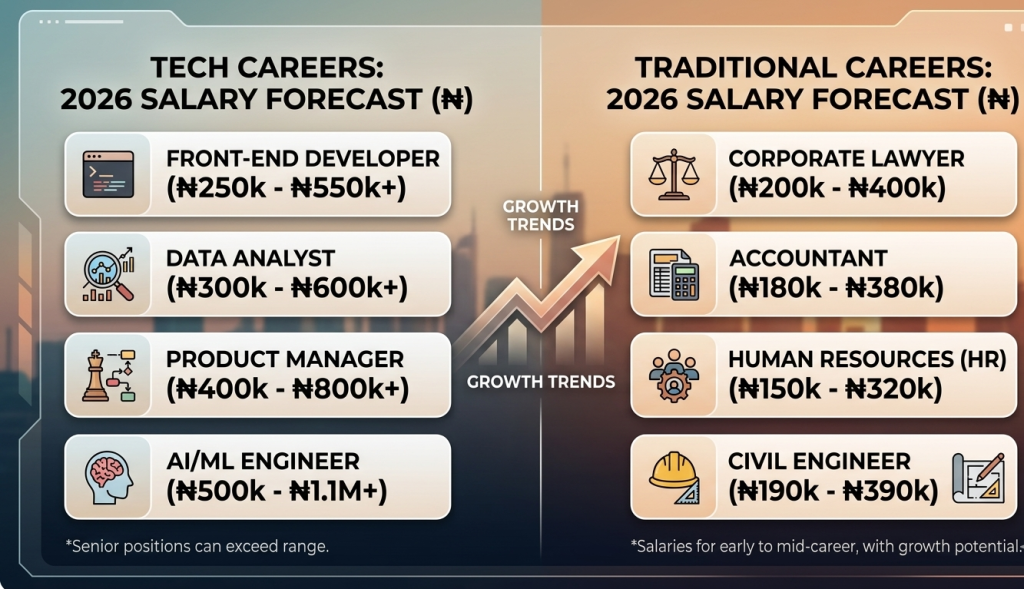
1. Software Development (Python & JavaScript): These two programming languages dominate the market. Python is the language of data science, artificial intelligence, and automation—JavaScript powers virtually every interactive website on the internet. At MzealTek, our software development graduates have gone on to secure remote positions, earning in USD – a life-changing income in Nigeria’s current economic climate. The ROI on a software development course is extraordinary compared to spending years climbing a traditional corporate ladder.
2. Cybersecurity: With Nigeria ranking among the top countries targeted by cybercriminals in Africa, businesses are desperately searching for security professionals. A certified cybersecurity analyst in Lagos today earns between 400,000 Naira and 800,000 Naira per month at mid- to large-sized enterprises. Remote opportunities are also opening up with international certifications such as CompTIA Security+ or Certified Ethical Hacker (CEH).
3. Data Analysis: Every business, from a neighbourhood supermarket in Yaba to a fintech giant in Victoria Island, generates data. The ability to read, interpret, and present that data is now a core business function, not a luxury. Tools like Microsoft Power BI, Google Data Studio, and Python’s Pandas library are becoming standard requirements on Nigerian job listings.
4. UI/UX Design: As Nigerian businesses race to establish a digital presence, the demand for designers who can create intuitive, beautiful user experiences has exploded. A skilled UI/UX designer with a strong portfolio can work for multiple international clients simultaneously, billing in dollars or pounds.
5. Cloud Computing (AWS & Azure): Cloud infrastructure is the engine room of the modern internet. Companies are migrating physical servers to the cloud at unprecedented rates, and they need trained engineers to manage those environments. AWS and Microsoft Azure certifications remain among the highest-paying credentials globally.
Let us be frank. A fresh graduate accountant in Lagos in 2025 earns between ₦80,000 and ₦150,000 monthly at most entry-level firms. A graduate who took the same amount of time to complete a web development bootcamp and build a modest portfolio can, within the same timeframe, be earning ₦250,000 to ₦500,000 from a combination of local and remote clients. Within two years, the gap widens dramatically. We have seen this at MzealTek first-hand: former bank tellers, teachers, and civil servants who retrained and are now earning more than their former department heads.
This is not to dismiss traditional careers; they remain important. But the data is clear: digital skills provide a faster, more reliable path to financial stability for Nigerians willing to put in the work.
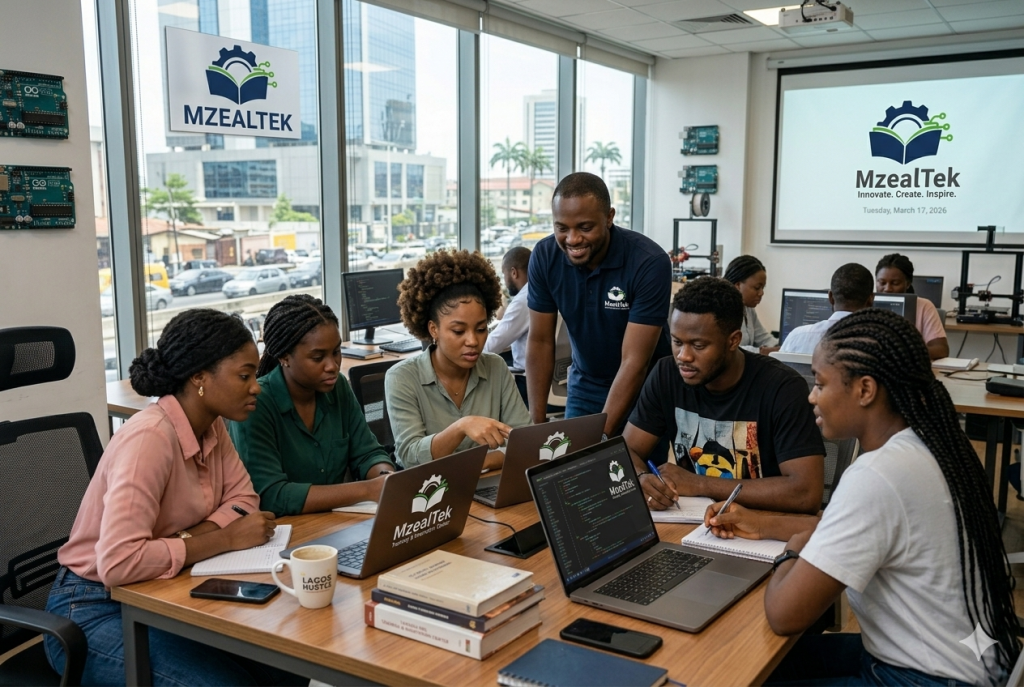
At MzealTek in Lagos, we have designed our curriculum specifically around the realities of the Nigerian market. We do not just teach you tools; we teach you how to apply those tools to Nigerian business problems, how to navigate the remote work ecosystem, and how to build a professional portfolio that gets you hired or helps you launch your own tech business. Our students do not just learn; they practise, they build, and they graduate ready to compete both locally and globally.
The question is no longer “should I learn tech?” For many Nigerians, the question is simply: “How soon can I start?”
If you have been sitting on the fence, consider 2026 your year of decision. The market is not waiting, and neither should you.