Address
304 North Cardinal St.
Dorchester Center, MA 02124
Work Hours
Monday to Friday: 7AM - 7PM
Weekend: 10AM - 5PM
Address
304 North Cardinal St.
Dorchester Center, MA 02124
Work Hours
Monday to Friday: 7AM - 7PM
Weekend: 10AM - 5PM
IT for the common Man
 ByMzeal01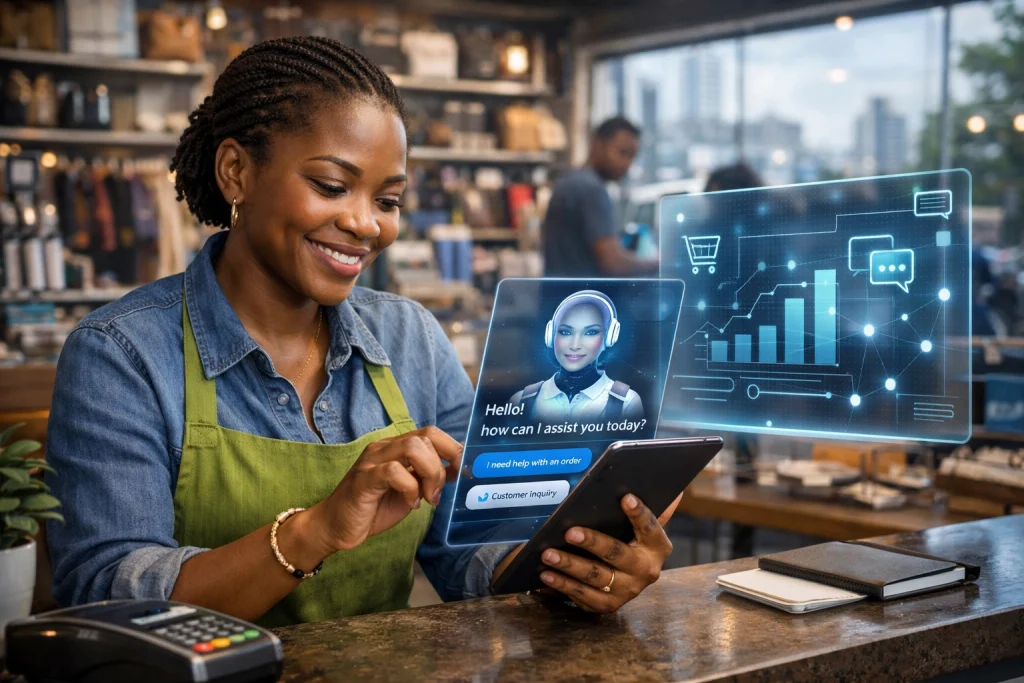
For many years, the concept of artificial intelligence (AI) felt like a distant dream, a fascinating but far-fetched idea confined to the realms of science fiction movies and futuristic novels. However, as we navigate through 2026, AI has not only arrived in Nigeria but has firmly established itself, not as a looming threat to human talent but as a powerful, transformative engine poised to revolutionise our economy. From the bustling tech hubs on Lagos Island to the innovative small businesses flourishing on the mainland, AI is fundamentally reshaping how we work, learn, and grow. At MzealTek, we are committed to staying at the absolute forefront of this profound technological shift, ensuring that our students and clients are not merely spectators but active participants, equipped to harness AI’s immense potential and avoid being left behind in this new digital era.
Nigerian entrepreneurs are globally renowned for their ingenuity, resilience, and resourcefulness. In 2026, this innate entrepreneurial spirit is being amplified by AI, enabling small and medium-sized enterprises (SMEs) to compete effectively and often outperform much larger national and even global brands. AI is democratising access to advanced business capabilities that were once exclusive to large corporations.
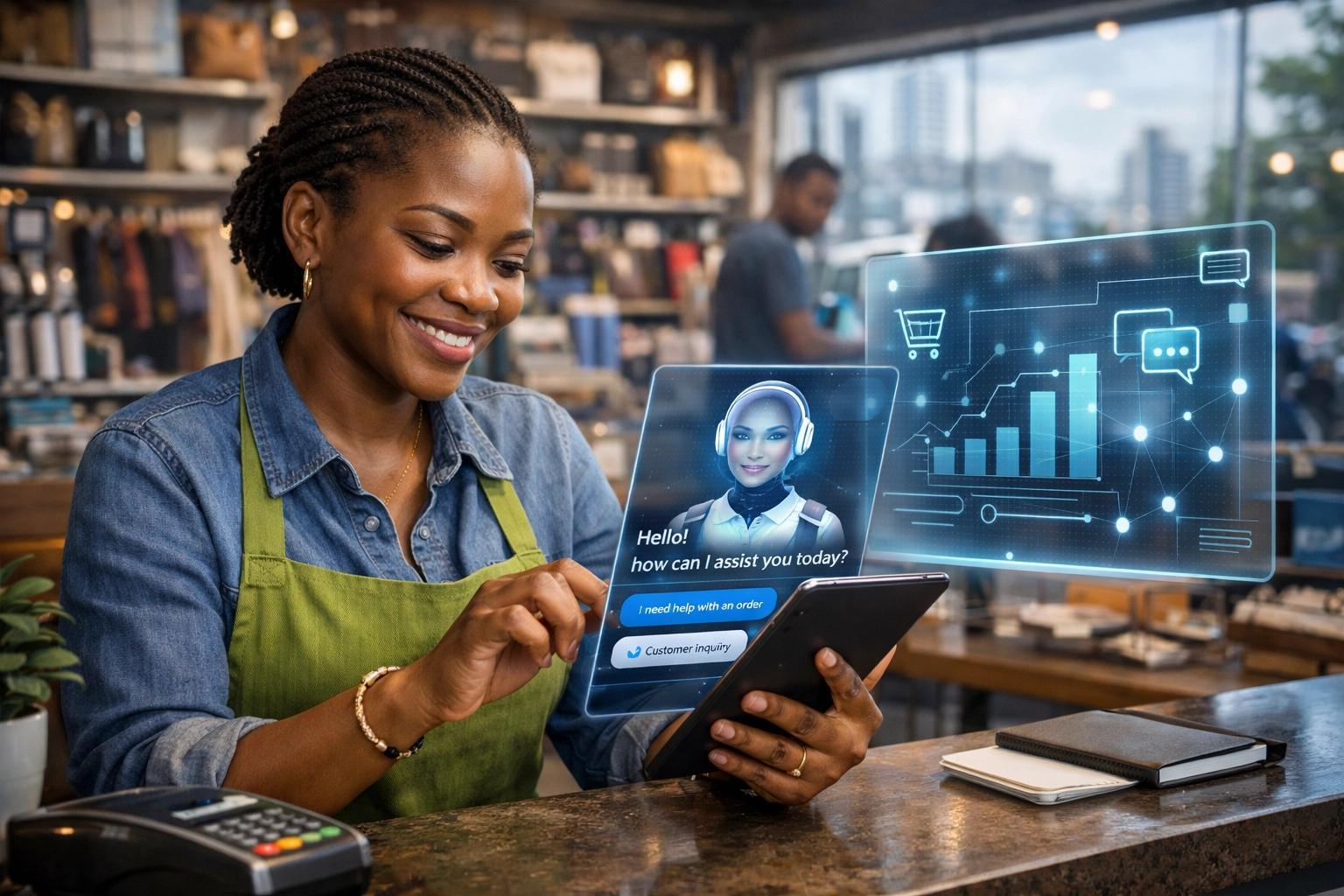
•Customer Support Transformation: Local shops and service providers are now seamlessly integrating AI-powered chatbots into their customer communication channels, particularly on popular platforms like WhatsApp. These intelligent chatbots can handle thousands of customer enquiries in real-time, providing instant responses, resolving common issues, and even communicating effectively in both English and prominent local languages such as Yoruba, Igbo, and Hausa. This not only enhances customer satisfaction but also frees up valuable human resources to focus on more complex tasks.
•Optimised Inventory Management: AI tools are empowering retail owners with predictive analytics, helping them forecast demand with unprecedented accuracy. By analysing historical sales data, seasonal trends, and even external factors like public holidays, AI can predict which products will sell fastest during peak seasons, minimising stockouts, reducing waste, and significantly increasing profit margins. This level of operational efficiency was previously unattainable for most SMEs.
•Personalised Marketing: AI algorithms can analyse customer behaviour and preferences to deliver highly personalised marketing campaigns, ensuring that the right message reaches the right customer at the right time, leading to higher conversion rates and stronger customer loyalty.
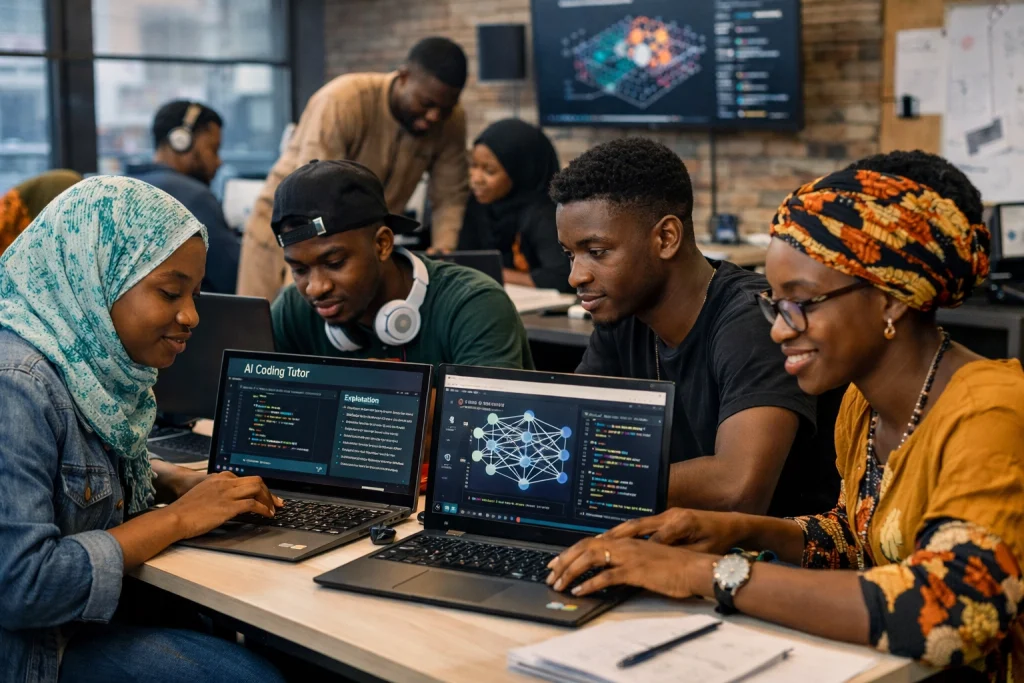
The traditional classroom model is undergoing a significant metamorphosis, particularly within Nigeria’s education sector. AI is being ingeniously deployed to create “personalised learning paths” that cater to the unique pace and style of individual students. At forward-thinking training centres like MzealTek, we are witnessing firsthand how AI-powered tutors and adaptive learning platforms are helping students master complex subjects, from intricate coding languages to advanced data analysis concepts, at their own optimal pace. This profound “democratisation of knowledge” means that a motivated student in Lagos now has access to the same quality of AI-driven educational tools and resources as their counterparts in Silicon Valley, effectively levelling the playing field and fostering a new generation of tech-savvy professionals.
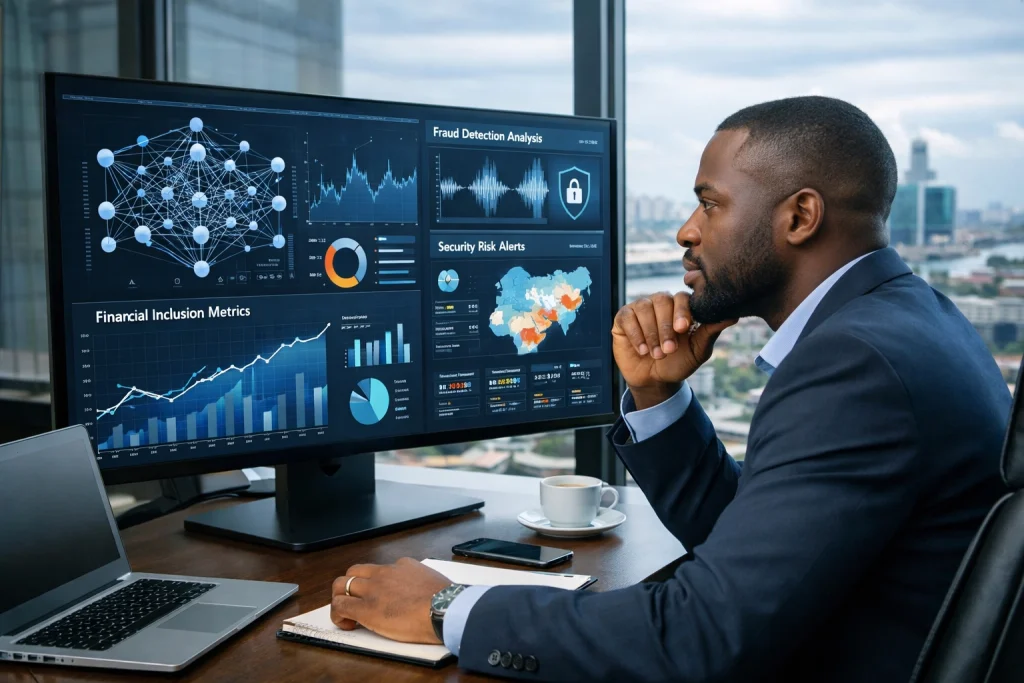
Nigeria continues to solidify its position as a global leader in the FinTech (Financial Technology) space, and AI is undoubtedly the secret sauce behind much of this success. In 2026, AI algorithms are playing a pivotal role in extending financial services to millions of previously unbanked or underbanked Nigerians. By analysing alternative data sources, such as mobile phone usage, social media activity, and utility payments, rather than relying solely on traditional credit scores, AI is enabling the provision of “nano-loans” and micro-financing solutions. Furthermore, AI is working tirelessly behind the scenes to detect and block fraudulent transactions with unparalleled speed and accuracy, making Nigeria’s burgeoning digital economy safer, more secure, and more trustworthy for everyone involved.
With Nigeria’s renewed and critical focus on achieving food security, AI is making significant inroads into the agricultural sector, moving from research labs directly into the fields. Farmers across the nation are now leveraging AI-driven drone imagery and sophisticated soil sensors to gain precise insights into their land. These technologies can determine exactly when and where to plant specific crops, monitor plant health, detect early signs of disease or pest infestation, and calculate the optimal amount of fertiliser and water required. This revolutionary “precision farming” approach is not only significantly increasing crop yields and reducing resource waste but is also helping Nigeria transition towards a more sustainable, efficient, and resilient agricultural future, crucial for feeding its rapidly growing population.
As AI continues its exponential growth, it is simultaneously creating an entirely new ecosystem of job opportunities and specialised career paths. The market is no longer solely seeking traditional “computer operators”. Instead, there is a burgeoning demand for highly specialised roles that interact directly with AI systems:
•Prompt Engineers: These are the experts who possess the unique skill of crafting precise, effective prompts and queries to extract the best possible results from AI models. They understand the nuances of AI language and can guide models to generate high-quality content, code, or insights.
•AI Ethics Consultants: As AI becomes more pervasive, ensuring its fair, unbiased, and responsible deployment is paramount. AI ethics consultants are professionals who specialise in identifying and mitigating biases in AI systems, developing ethical guidelines, and ensuring AI technologies align with societal values and regulatory frameworks.
•Data Annotators: These individuals play a crucial role in “teaching” AI models. They meticulously label and categorise data, helping AI systems to accurately recognise and understand local Nigerian contexts, languages, cultural nuances, and specific datasets, thereby making AI more relevant and effective for the Nigerian market.
The future of AI in Nigeria is not about robots displacing human workers; it is fundamentally about empowering Nigerians to utilise smart, intelligent tools to solve pressing local problems, drive innovation, and create new economic opportunities. Whether the goal is to dramatically improve business efficiency, enhance educational outcomes, or master a new, cutting-edge tech skill, the possibilities and opportunities are truly limitless for those willing to embrace this transformative technology.
Do you aspire to be an integral part of Nigeria’s AI revolution? At MzealTek, we have meticulously integrated AI literacy and practical AI applications into all our training programmes, spanning from foundational web development to advanced data entry. Our curriculum is designed to equip you with the knowledge and hands-on experience needed to thrive in an AI-driven world. Don’t just passively observe the future unfolding; learn how to actively build it and shape Nigeria’s digital destiny with MzealTek.